Leading PVC Tarpaulin & Industrial Fabric Manufacturer in China
PVC Coated Fabric Manufacturer | OEM & ODM Service | Worldwide Export


CALL TO SCHEDULE YOUR FREE!
Toggle Navigation
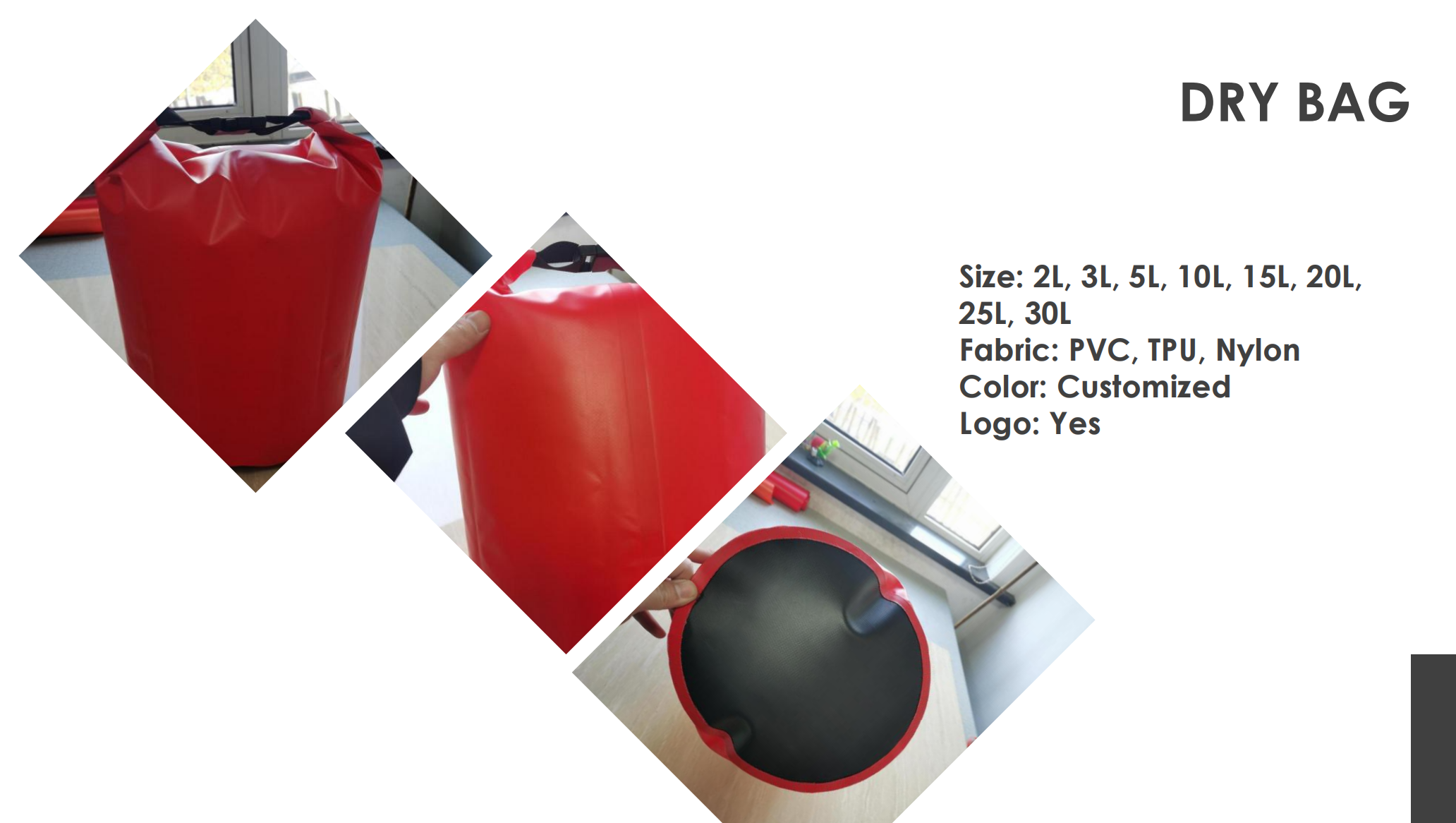
Choosing the right waterproof material is one of the most important decisions when manufacturing dry bags. The material directly affects waterproof performance, durability, production efficiency, product lifespan, and manufacturing costs.
Today, PVC coated fabric and TPU coated fabric are the two most widely used materials for waterproof outdoor bags. Although both offer excellent waterproof protection, they perform differently in flexibility, abrasion resistance, welding technology, environmental characteristics, and overall production cost.
For outdoor brands, OEM manufacturers, and product designers, understanding these differences helps optimize product quality while keeping production costs under control.
If you are looking for industrial waterproof materials for dry bag production, you may also want to explore our PVC coated fabric solutions:
PVC coated fabric is made by coating high-strength polyester fabric with Polyvinyl Chloride (PVC). The coating creates a waterproof barrier while significantly improving abrasion resistance and tear strength.
PVC coated fabrics have been widely used for decades in:
Because PVC coating can be welded using RF (High Frequency), hot air, or hot wedge welding, manufacturers can produce completely waterproof seams without sewing.
TPU (Thermoplastic Polyurethane) fabric consists of a polyester or nylon base laminated with TPU film.
Compared with PVC, TPU offers:
TPU is commonly used in:
Although TPU provides excellent flexibility, it usually comes at a significantly higher material cost.
| Feature | PVC Coated Fabric | TPU Fabric |
|---|---|---|
| Waterproof Performance | Excellent | Excellent |
| Abrasion Resistance | Excellent | Very Good |
| Tear Strength | Excellent | Very Good |
| UV Resistance | Excellent | Good |
| RF Welding | Excellent | Limited |
| Hot Air Welding | Excellent | Excellent |
| Cold Flexibility | Good | Excellent |
| Elasticity | Medium | High |
| Weight Options | Wide Range | Limited |
| Production Cost | Lower | Higher |
| Material Cost | Lower | Higher |
| Outdoor Service Life | Excellent | Excellent |
| Recycling Potential | Moderate | Better |
Both materials provide complete waterproof protection when properly welded.
However, PVC coated fabrics have one major manufacturing advantage:
The surface coating is thicker, allowing stronger and more consistent RF welding.
This makes PVC particularly suitable for:
Outdoor dry bags are constantly exposed to:
PVC coated fabric generally offers better abrasion resistance under these harsh conditions.
For expedition bags expected to last many years, PVC remains one of the industry's preferred materials.
From a manufacturing perspective, PVC has several important advantages.
PVC coated fabric can be processed using:
These methods produce waterproof seams quickly and consistently.
TPU typically relies on hot air welding or adhesive lamination, depending on the product design.
Because RF welding is faster and more efficient, many OEM factories continue to choose PVC for large-volume production.
Cost remains one of the biggest reasons many manufacturers continue selecting PVC.
Generally speaking:
For brands producing thousands of dry bags each month, material savings can become substantial.
Many buyers ask whether TPU is more environmentally friendly than PVC.
The answer depends on the specific application.
TPU:
Modern PVC formulations, however, have improved significantly.
Many manufacturers now offer:
For many industrial and commercial applications, compliant PVC remains an accepted and practical choice.
The right material depends on your target market.
PVC coated fabric is ideal for:
TPU is often preferred for:
Despite the growing popularity of TPU, PVC coated fabrics continue to dominate many commercial waterproof bag applications because they offer an excellent balance of:
For OEM factories producing large quantities of waterproof bags, PVC remains one of the most practical material choices.
Yes. When RF welded or hot-air welded correctly, PVC coated fabrics create fully waterproof seams suitable for outdoor use.
Not necessarily.
TPU offers greater flexibility, while PVC generally provides higher abrasion resistance and better RF welding performance.
Both materials offer excellent durability, but PVC coated fabrics often perform better in heavy-duty industrial and commercial environments.
Yes.
Manufacturers can customize:
For most commercial waterproof bag production, PVC coated fabric provides a lower total manufacturing cost while maintaining excellent waterproof performance.
Both PVC coated fabric and TPU are excellent waterproof materials, but they serve different market needs.If your priority is lightweight premium consumer products, TPU may be the better option.
If your focus is durability, reliable welding, production efficiency, and competitive pricing, PVC coated fabric remains one of the best materials available for dry bag manufacturing.
At Winsum Textiles, we supply high-performance PVC coated fabrics for dry bags, waterproof backpacks, marine equipment, fishing gear, and other industrial waterproof applications.
Interested in manufacturing waterproof dry bags? Explore our PVC coated fabric solutions and learn more about dry bag production applications.